Grand Designs
by Rush

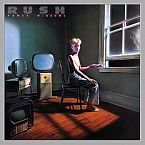
Album: Power Windows (1985)
Play Video

Songfacts®:

  • Neil Peart's drumming is at the forefront of "Grand Designs," a track from Rush's 1985 album Power Windows. In press materials for the album, lead singer Geddy Lee said: "I don't remember any difficulty with that song. One of the best things about playing with the same person for a very long time is you have this kind of telepathic connection in a way. You know each other so well stylistically that there's a whole range of probabilities that you have in common. So if I hear him going in a direction or he hears me going in a direction, we can shift to that direction. I think we've figured out a way to complement each other so that it's comfortable. It's something that comes with time and work. And knowing when to simplify and when not to simplify. Sometimes when a bass player is playing with a rhythmically difficult drum part, that's the time to simplify, help the part cruise by playing more consistently. That can help knit the parts together. At the same time, if there's another drum part coming up where he's going to be more solid and fundamental, that will enable the bass to stretch out a bit and get more active. So it's give and take."
  • Rush guitarist Alex Lifeson explained his approach on this song in a April 1986 Guitar Player interview): "Most of 'Grand Designs' is one guitar that's not even doubled. We may have put it through an AMS [digital processor] at about 40 milliseconds and split it left and right. I know we did that with the bouncing echoes in the first verse, where the main guitar is in the middle and the harmonic line is on the outside. That one's fairly straightforward, except for the acoustic guitars in the second chorus. I was very much influenced by Allan Holdsworth a number of years ago, the way he uses the whammy bar to slur notes and move around. That got me interested in using one and trying to develop a style with one. So many people use it now that it's not that unique, and actually I've started to move away from it a bit. I've gotten a bit lazy with my natural vibrato since I've been relying a lot more on the whammy bar. It's time for a change."
  • The lyric is about seeing past the visage to find the substance, which wasn't easy even in 1985. The song doesn't have a chorus, and the title only shows up in the last line. Rush has never been afraid to deploy unusual structures in their songs.

    Geddy Lee offered some explanation in an April 1986 Guitar Player interview: "Invariably, every time we decide we're going to fade out, we start getting into the fade and everyone loosens up and the track starts getting better. That happened with 'Mystic Rhythms.' The fade-out is about a minute long because we liked every little nuance. The end of 'Grand Designs' is also like that. There are about seven phrases, and they're all different. None of that was planned; Neil was doing the drum track, and at the end, the sequencers were going and he just kept punching-in and going, basically flailing and hacking through it. Everybody loved it, so we decided to keep it in. Then we had to learn to play it onstage."

Comments: 2

  • Skot from Hobart, WiGreat Album and Song. This really, to me, seems to have a lot of connection to Ayn Rand again- seems like its right out of the Fountainhead.
  • John from Asheville, NcUnderrated song on this album. Love the "against the run of the mill" portion, melodically.
see more comments

Editor's Picks

Ed Roland of Collective Soul

Ed Roland of Collective SoulSongwriter Interviews

The stories behind "Shine," "December," "The World I Know" and other Collective Soul hits.

Peter Lord

Peter LordSongwriter Interviews

You may not recognize his name, but you will certainly recognize Peter Lord's songs. He wrote the bevy of hits from Paula Abdul's second album, Spellbound.
Donald Fagen

Donald FagenSongwriter Interviews

Fagen talks about how the Steely Dan songwriting strategy has changed over the years, and explains why you don't hear many covers of their songs.
The Police

The PoliceFact or Fiction

Do their first three albums have French titles? Is "De Do Do Do, De Da Da Da" really meaningless? See if you can tell in this Fact or Fiction.
Charlotte Caffey of The Go-Go's

Charlotte Caffey of The Go-Go'sSongwriter Interviews

Charlotte was established in the LA punk scene when a freaky girl named Belinda approached her wearing a garbage bag.
Chris Squire of Yes

Chris Squire of YesSongwriter Interviews

One of the most dynamic bass player/songwriters of his time, Chris is the only member of Yes who has been with the band since they formed in 1968.