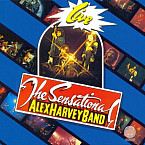
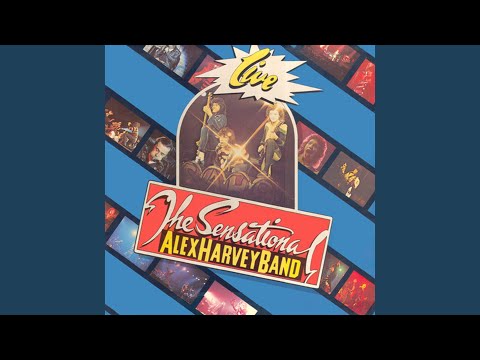
Album: Live (1975)
Charted: 7
Play Video

Songfacts®:

  • The Sensational Alex Harvey Band transformed Tom Jones' 1968 hit "Delilah" from a polished pop song into something far more unnerving. Their live version takes the song's murder-ballad at face value, amplifying its violence through theatrical performance rather than smoothing it over. Ironically, it became the band's biggest chart hit, a success that also left many listeners completely missing the point. It's rather like mistaking Macbeth for a cheerful guide to Scottish tourism.
  • "Delilah" was written by the British songwriting team of Les Reed (music) and Barry Mason (lyrics), whose partnership also includes classics such as "The Last Waltz" and "Les Bicyclettes De Belsize." Reed originally offered the song to PJ Proby, who recorded it for his 1968 album Believe It Or Not. Reed then persuaded Tom Jones to record it, and Jones' dramatic version became an international hit later that year.
  • The lyric tells the story of a jealous man who watches his unfaithful lover through her window, waits for her new partner to leave, then confronts her at dawn. When she laughs at him, he stabs her to death before pleading for forgiveness as the police close in.

    Despite its singalong chorus, the song is anything but lighthearted. SAHB drummer Ted McKenna rejected suggestions that it was camp entertainment, telling Classic Rock magazine: "It's about a man driven mad by betrayal who murders the woman he loves, and blaming her for what he's done. What's funny about that?"
  • Questions over the song's authorship have lingered for decades. Sylvan Whittingham (later Sylvan Mason), who was married to Barry Mason at the time, has consistently maintained that she co-wrote the lyric, despite not receiving official credit. She told Songfacts Les Reed had already written the melody, title and memorable "Why, why, why Delilah" refrain before bringing the tape to Barry. Barry then took it to Sylvan, and together they completed the lyric in around two hours at Chappell Music Publishing's offices on St George Street in London.

    According to Sylvan, Reed had originally envisioned a modern retelling of the biblical story of Samson and Delilah, though almost all traces of that concept disappeared as the lyric evolved. Only the line, "But I was lost like a slave that no man could free," survives from the original idea. Instead, the finished story borrowed more heavily from the 1954 musical film Carmen Jones, in which Harry Belafonte's character kills the woman he loves in a jealous rage.

    Sylvan said documents from her divorce settlement with Barry Mason supports her contribution, while Tom Jones also acknowledges her as a co-writer in his autobiography.
  • The Sensational Alex Harvey Band had been performing "Delilah" live since at least 1973, including a memorable appearance on The Old Grey Whistle Test, where its darker themes were impossible to ignore.

    Bassist Chris Glenn told Uncut magazine, the song was only added to the live set, "because audiences loved the wee dance the band had developed when playing Del Shannon's "Runaway," so they came up with something similar. It could have been almost anything, but Alex liked what he could do with the lyrics. People forget it's a song about a stalker who kills his wife."
  • During the instrumental break, Harvey, guitarist Zal Cleminson and Glen performed an exaggerated, almost comic dance while the audience happily clapped along. The disconnect was entirely deliberate. Harvey wanted audiences to ask themselves why they were enjoying a performance built around a story of domestic murder. It followed a pattern already established by the band on songs such as their version of Jacques Brel's "Au Suivant," where uncomfortable subject matter was wrapped inside accessible rock arrangements.

    By the time "Delilah" reached Top of the Pops, it was surrounded by upbeat chart hits, leading many viewers to mistake it for a novelty performance rather than a carefully staged piece of musical theater.
  • The SAHB recorded the version that became a hit live at London's Hammersmith Odeon on May 24, 1975. "Delilah" was released as a single without the band's knowledge, and its climb into the UK Top 10 surprised everyone involved, including SAHB.

    Producer Dave Batchelor ldescribed it to Uncut as "one of the best covers of all time... a really clever and cheeky version. It should have been a much bigger hit and it deserves respect."
  • Its chart success caught the attention of the song's original writers. Reed and Mason subsequently offered more of their compositions to SAHB's management in the hope of recreating the magic; a reminder that, in the music business, if lightning strikes once, someone will inevitably try selling you another thunderstorm.

Comments

Be the first to comment...

Editor's Picks

Dave Edmunds

Dave EdmundsSongwriter Interviews

A renowned guitarist and rock revivalist, Dave took "I Hear You Knocking" to the top of the UK charts and was the first to record Elvis Costello's "Girls Talk."

Barney Hoskyns Explores The Forgotten History Of Woodstock, New York

Barney Hoskyns Explores The Forgotten History Of Woodstock, New YorkSong Writing

Our chat with Barney Hoskyns, who covers the wild years of Woodstock - the town, not the festival - in his book Small Town Talk.

Real or Spinal Tap

Real or Spinal TapMusic Quiz

They sang about pink torpedoes and rocking you tonight tonight, but some real lyrics are just as ridiculous. See if you can tell which lyrics are real and which are Spinal Tap in this lyrics quiz.

John Kay of Steppenwolf

John Kay of SteppenwolfSongwriter Interviews

Steppenwolf frontman John Kay talks about "Magic Carpet Ride," "Born To Be Wild," and what he values more than awards and accolades.

Bob Daisley

Bob DaisleySongwriter Interviews

Bob was the bass player and lyricist for the first two Ozzy Osbourne albums. Here's how he wrote songs like "Crazy Train" and "Mr. Crowley" with Ozzy and Randy Rhoads.

Francis Rossi of Status Quo

Francis Rossi of Status QuoSongwriter Interviews

Doubt led to drive for Francis, who still isn't sure why one of Status Quo's biggest hits is so beloved.