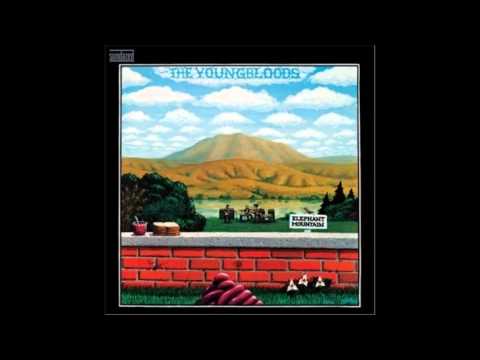
Darkness, Darkness

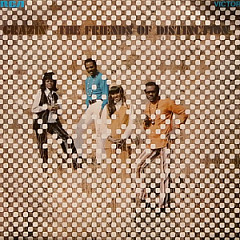
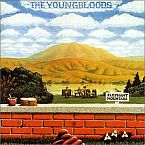
Album: Elephant Mountain (1969)
Charted: 86
Play Video

Songfacts®:

  • Befitting the title, this is a very mordant song, evoking the horror a soldier would feel while waiting for sleep to come during the Vietnam War. It was written by Youngbloods lead singer Jesse Colin Young, who told Songfacts the story behind it. "First it was a an acid trip that had a frightening end to it, and that started me thinking about terror," he said. "And then I went, My God, what about my friends in Vietnam? Talk about terror. That's how I connected with it.

    One of my friends had just died that year. He was in the Coast Guard and they blew up his boat. He was the first one I knew who died, and that brought it closer to me. I sat in the kitchen and put myself there because I wanted them to know: I'm listening, I'm with you, I'm so thankful to not be there and I'm sorry you guys are. I'm thinking of you and I'm praying that you get home in one piece. And 'Darkness' came."
  • The fiddle at the beginning of this song was played by David Lindley, a session musician of great renown who appeared on tracks by Dolly Parton, Joe Walsh, James Taylor and many others.
  • In an interview with Ray Shasho, Jesse Colin Young explained that although the song was written in New York, he drew inspiration from listening to the radio station KSAN in San Francisco, which would play lots of unusual music.
  • Charlie Daniels produced most of the Elephant Mountain album, including this track. His council and composure was very valuable, as the Youngbloods had recently lost their guitarist, Jerry Corbitt, and were down to a trio. "Charlie was still wearing three-piece Polyester suits and he had short hair with great-big milk-bottle-bottom glasses," Jesse Colin Young told Songfacts. "He was a marvelous man. Just the kind of guy we needed."
  • Released on RCA Victor backed by "On Sir Francis Drake," this was just a minor hit, peaking at #86 in the US. It was a stark contrast from The Youngbloods' smash hit, "Get Together."
  • "Darkness, Darkness" has been covered by many artists, perhaps most memorably by Mott The Hoople for their 1971 Brain Capers album with Mick Ralphs rather than Ian Hunter supplying the vocals. Robert Plant included the song on his 2002 album Dreamland. His version earned a Grammy nomination for Best Male Rock Vocal Performance. >>
    Suggestion credit:
    Alexander Baron - London, England

Comments: 2

  • Rick Rollins from Knoxville,tn.I’ve always loved this song it brought back memories of 69 and lots of people
  • Jon Mcmillan Christenson from Coarsegold CaliforniaIn the shadow of the Vietnam War, I heard this song. It resonated with emptiness I felt about the youth of our nation ground up the war machine. In the end it became an endless night for my friends who came back forever changed.
see more comments

Editor's Picks

Reverend Horton Heat

Reverend Horton HeatSongwriter Interviews

The Reverend rants on psychobilly and the egghead academics he bashes in one of his more popular songs.

Edwin McCain

Edwin McCainSongwriter Interviews

"I'll Be" was what Edwin called his "Hail Mary" song. He says it proves "intention of the songwriter is 180 degrees from potential interpretation by an audience."

Francesca Battistelli

Francesca BattistelliSongwriter Interviews

The 2011 Artist of the Year at the Dove Awards isn't your typical gospel diva, and she thinks that's a good thing.

Janis Ian: Married in London, but not in New York

Janis Ian: Married in London, but not in New YorkSong Writing

Can you be married in one country but not another? Only if you're part of a gay couple. One of the first famous singers to come out as a lesbian, Janis wrote a song about it.

Julian Lennon

Julian LennonSongwriter Interviews

Julian tells the stories behind his hits "Valotte" and "Too Late for Goodbyes," and fills us in on his many non-musical pursuits. Also: what MTV meant to his career.

Mark Arm of Mudhoney

Mark Arm of MudhoneySongwriter Interviews

When he was asked to write a song for the Singles soundtrack, Mark thought the Seattle grunge scene was already overblown, so that's what he wrote about.