Nation Shall Speak Unto Nation

Album: Nation Shall Speak Unto Nation (2025)
Play Video

Songfacts®:

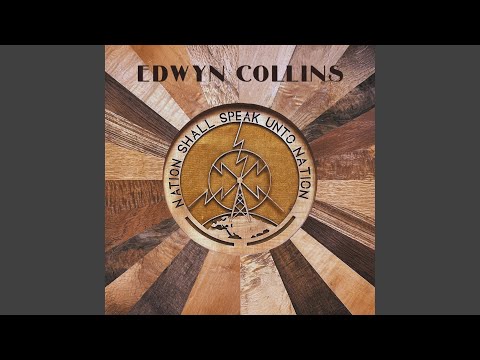
  • The phrase "Nation shall speak peace unto Nation" was adopted as the official motto of the BBC when it became the British Broadcasting Corporation in 1927 and is included on its coat of arms. Edwyn Collins borrowed the phrase from the front of an old BBC microphone he kept in his studio.

    The resulting song asks, with gentle urgency, how we're supposed to get along in this fractured world if we can't even manage a proper conversation.
  • If I can't talk to you
    And you can't talk to me
    How can nation speak unto nation?


    The song isn't just Collins musing about geopolitics over a cup of tea. It's personal. It references his recovery from a life-changing stroke in 2005 and his ongoing journey with speech and physical impairments. He is still speaking, still writing, still singing, and pondering the delicate miracle of communication itself.

    "It's talking about my stroke," Collins told The Independent. "It's talking about me, I guess. I think I was an intellectual, let's say."
  • Collins' wife and longtime manager, Grace Maxwell, often joins him for interviews, sometimes to clarify and sometimes to gently spar. She describes the song as being about the ongoing work of connection; how words don't always come easily and how reaching out is often the braver thing to do than retreating inward.

    "When Edwyn's struggling and presents me with a lyric that I think's not very focused, I've not got to write the thing," Grace said. "I help him focus what he's trying to say. If he's struggling to get the meaning right, we'll talk it through. 'What are you trying to say here?' And we'll have a bit of an argument, to get him on a path. This is aphasia."
  • Collins remembers the pre-stroke Edwyn Collins as being sharp and probably a bit too clever for his own good.

    Back when the words came easily
    I had the answer to everything
    Revelling in a smart-alec comeback


    "I was the smart guy, the outrageous guy," he told Mojo magazine. "Possibly I was not very nice. A good laugh. Drunk, of course. Drinking, in the clubs, it was the '80s, and possibly the '90s. Everyone was drunk at time, weren't they?"
  • The song gives its name to Collins' 10th solo album, recorded in the bracing wilds of Helmsdale, in North East Scotland, at his Clashnarrow Studio. He co-produced it with Sean Read and Jake Hutton, both of whom also play on the record.
  • On "Nation Shall Speak Unto Nation," Collins sings directly about how difficult it is for him to communicate since his stroke. "It's about aphasia, my struggle to express myself clearly," he told Uncut magazine.

    The song also touches on communication and miscommunication between other folk. "It's about breakdown of communication between the powers that be in this world," Collins said. "Lots of talking and not much understanding."

Comments

Be the first to comment...

Editor's Picks

Janet Jackson

Janet JacksonFact or Fiction

Was Janet secretly married at 18? Did she gain 60 pounds for a movie role that went to Mariah Carey? See what you know about Ms. Jackson.

John Kay of Steppenwolf

John Kay of SteppenwolfSongwriter Interviews

Steppenwolf frontman John Kay talks about "Magic Carpet Ride," "Born To Be Wild," and what he values more than awards and accolades.

Jim Adkins of Jimmy Eat World

Jim Adkins of Jimmy Eat WorldSongwriter Interviews

Jim talks about the impact of "The Middle" and uses a tree metaphor to describe his songwriting philosophy.

Songs Discussed in Movies

Songs Discussed in MoviesSong Writing

Bridesmaids, Reservoir Dogs, Willy Wonka - just a few of the flicks where characters discuss specific songs, sometimes as a prelude to murder.

David Gray

David GraySongwriter Interviews

David Gray explains the significance of the word "Babylon," and talks about how songs are a form of active imagination, with lyrics that reveal what's inside us.

Graham Bonnet (Alcatrazz, Rainbow)

Graham Bonnet (Alcatrazz, Rainbow)Songwriter Interviews

Yngwie Malmsteen and Steve Vai were two of Graham's co-writers for some '80s rock classics.