Christmas (Baby Please Come Home)
by U2

Album: A Very Special Christmas (1987)
Play Video

Songfacts®:

  • U2's "Christmas (Baby Please Come Home)" is a cover of a song from 1963 by Darlene Love. U2 recorded it at the behest of Jimmy Iovine, who produced their 1983 live album Under A Blood Red Sky and later, their album Rattle And Hum. Iovine used it for the album A Very Special Christmas, a compilation of Christmas songs that raised money for the Special Olympics. Like the other artists who contributed to the album, U2 donated their time and efforts.
  • U2 recorded the song on July 30, 1987 at their soundcheck before their concert in Glasgow, Scotland. Jimmy Iovine flew there to record it and did the production work.

    U2 was one of 15 artists to lend a song to the A Very Special Christmas album. Iovine put it together to honor his dad, who died in 1985 soon after to holidays. He had worked with many big-name artists so he was able to solicit contributions, but the logistics could be challenging. U2 was on tour so they didn't have time to enter a studio; Iovine broke that barrier by recording them at a sound check.
  • Darlene Love, who sang the original "Christmas (Baby Please Come Home)," added background vocals that were overdubbed to U2's version. Love also sang backup on another track from the A Very Special Christmas album: Whitney Houston's version of "Do You Hear What I Hear?"
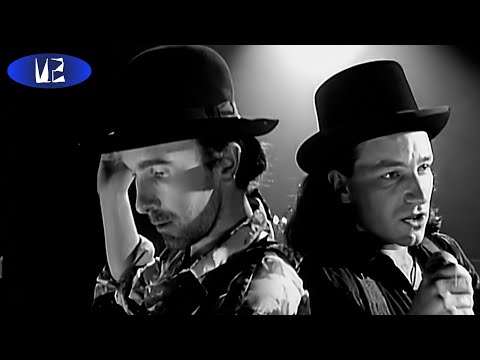
  • U2 shot a video for this song at another soundcheck: Baton Rouge, Louisiana on November 26, 1987. By this time, the A Very Special Christmas album had been out for six weeks and the only video available from it was for Run-DMC's "Christmas in Hollis." The U2 video was quickly edited and sent to MTV, which put it in rotation right away, happy to have a Christmas offering from one of the hottest bands in the world.
  • The original "Christmas (Baby Please Come Home)" was produced by Phil Spector and part of his A Christmas Gift for You from Phil Spector album, which also included The Ronettes' versions of "Sleigh Ride" and "Frosty the Snowman," bringing a modern take on Christmas music. "Christmas (Baby Please Come Home)" was the only original song on the set; it gradually became a holiday favorite, with Love performing it annually on David Letterman's show. By the time U2 recorded it, the song was well known to most listeners.
  • Radio stations were thrilled to have this song available for their holiday programming. U2 was huge thanks to their The Joshua Tree album. Their songs "Where The Streets Have No Name" and "Desire" were getting airplay around this time, and "Christmas (Baby Please Come Home)" was a welcome addition. Other songs from the A Very Special Christmas album that earned a lot of airplay were Bruce Springsteen's "Merry Christmas Baby," Madonna's "Santa Baby," and Eurythmics' "Winter Wonderland."

Comments

Be the first to comment...

Editor's Picks

Corey Hart

Corey HartSongwriter Interviews

The Canadian superstar talks about his sudden rise to fame, and tells the stories behind his hits "Sunglasses At Night," "Boy In The Box" and "Never Surrender."

Rob Halford of Judas Priest

Rob Halford of Judas PriestSongwriter Interviews

Rob Halford dives into some of his Judas Priest lyrics, talking about his most personal songs and the message behind "You've Got Another Thing Comin'."

What Musicians Are Related to Other Musicians?

What Musicians Are Related to Other Musicians?Song Writing

A big list of musical marriages and family relations ranging from the simple to the truly dysfunctional.

Zac Hanson

Zac HansonSongwriter Interviews

Zac tells the story of Hanson's massive hit "MMMbop," and talks about how brotherly bonds effect their music.

Ian Gillan of Deep Purple

Ian Gillan of Deep PurpleSongwriter Interviews

Deep Purple frontman Ian Gillan explains the "few red lights" in "Smoke On The Water" and talks about songs from their 2020 album Whoosh!

Mike Scott of The Waterboys

Mike Scott of The WaterboysSongwriter Interviews

The stories behind "Whole Of The Moon" and "Red Army Blues," and why rock music has "outlived its era of innovation."